The death of seasonal dressing and the rise of fluid luxury
Walter Cicchetti - stock.adobe.com
By Jana Short, editor-in-chief
There was a time when fashion followed a predictable rhythm, one that aligned itself with geography and tradition in a way that felt almost unquestioned. Fall arrived with weight and intention, bringing structured coats, heavier fabrics, and a return to darker palettes, signaling a clear departure from the lightness of summer. It was a system that worked for a world that stayed still.
That is no longer the world we live in.
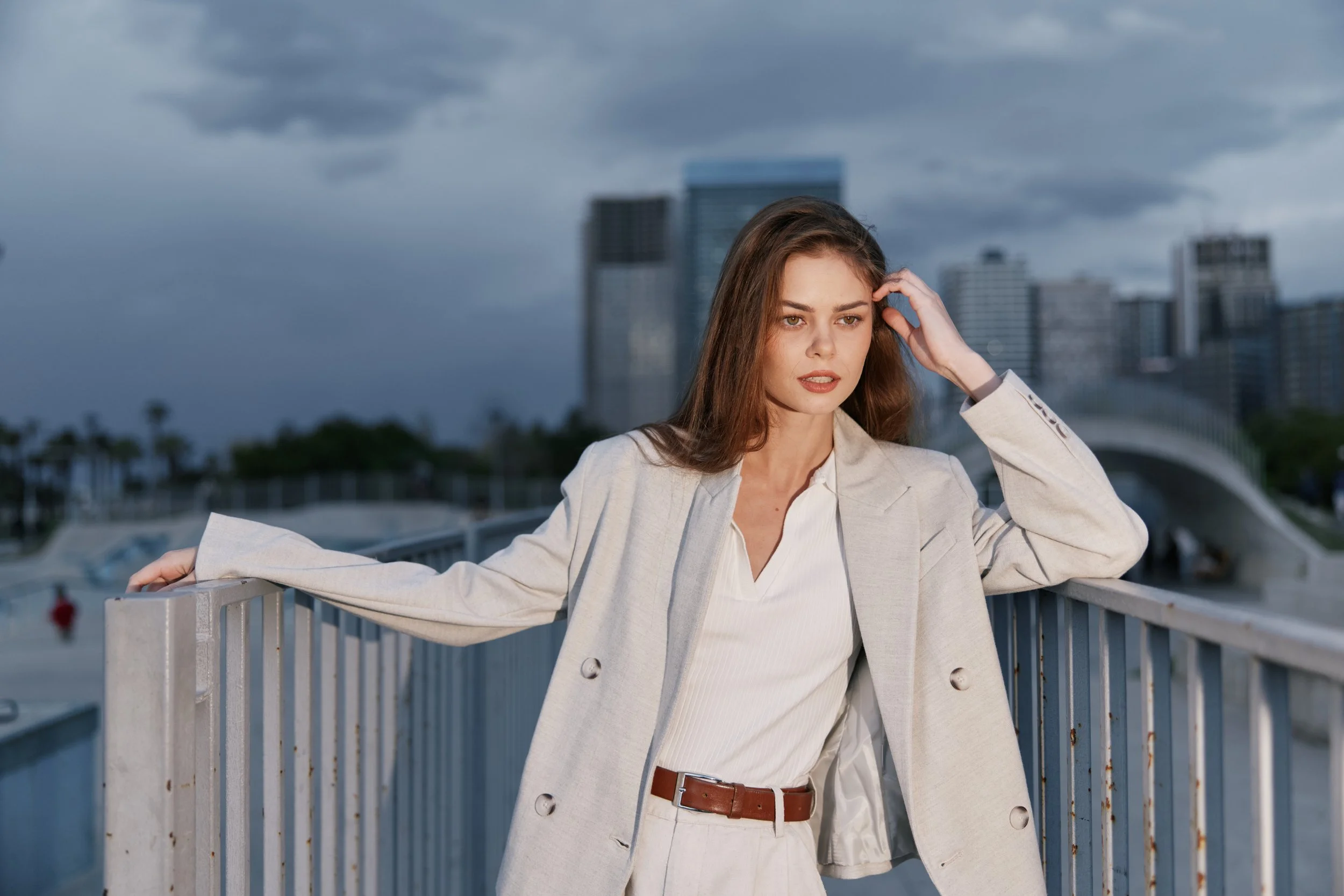
Today’s luxury woman moves with purpose, not limitation. She begins her day in Manhattan, stepping into a city defined by precision, pace, and presence. By evening, she may find herself in South Florida, where the air softens, and the ocean reframes everything it touches. Her life does not pause for seasonal transitions, and neither does her wardrobe.
This evolution has quietly reshaped the fashion landscape, challenging designers to rethink what fall truly means. The boundaries that once separated resortwear from seasonal collections are dissolving, replaced by a more fluid philosophy rooted in movement, versatility, and refinement. What is emerging is not a compromise between climates, but a new standard of dressing that reflects how modern women actually live.
At New York Fashion Week, this shift is no longer subtle. Designers are presenting collections that prioritize adaptability without sacrificing structure. Silk suiting has become a cornerstone, offering the polish expected in Manhattan while maintaining a lightness that carries effortlessly into warmer environments. Open-weave knits, breathable tailoring, and layered textures create depth without heaviness, allowing pieces to transition seamlessly from city streets to coastal evenings.
This is not about removing sophistication. It is about redefining it.
Designers who once built collections around rigid seasonal expectations are now responding to a woman who refuses to be confined by them. Brands like The Row and Khaite have embraced a philosophy of quiet luxury that lends itself naturally to this evolution. Their pieces are not tied to a specific place or time. They exist in a space where elegance is constant, regardless of environment.
Meanwhile, in South Florida, designers are refining their approach to meet this moment from a different angle. Known for fluidity and ease, many are introducing sharper tailoring and more structured silhouettes that allow their collections to move confidently into urban settings. The result is a dialogue between two distinct fashion identities, each influencing the other in a way that feels intentional and elevated.
Color has followed suit. The stark divide between summer brightness and fall depth has softened into a more cohesive palette of warm neutrals, muted tones, and layered shades that feel equally at home in both environments. Creams, soft charcoals, and subtle earth tones replace the need for dramatic seasonal shifts, allowing the wardrobe to flow rather than restart.
What defines this new approach is precision.
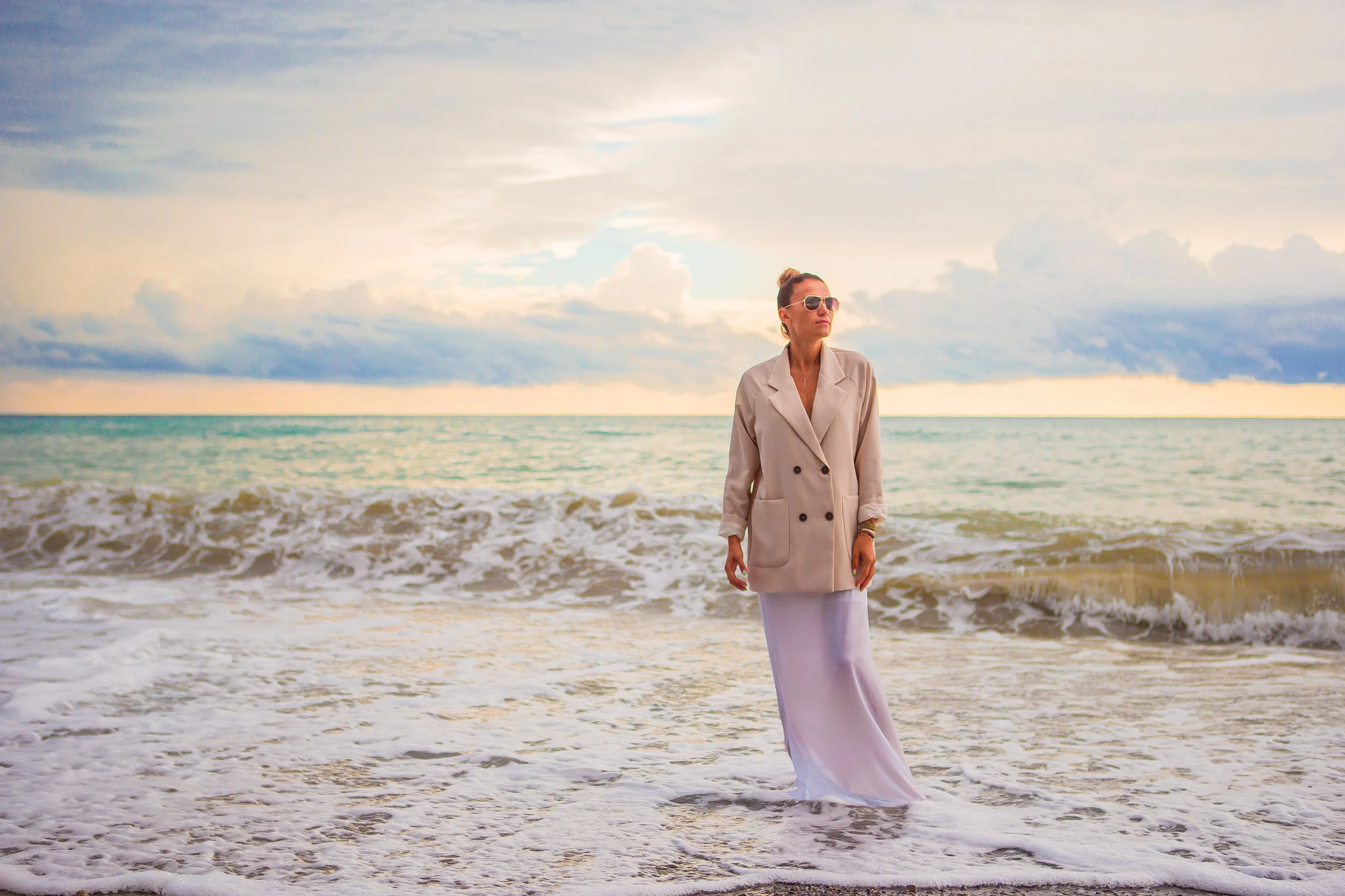
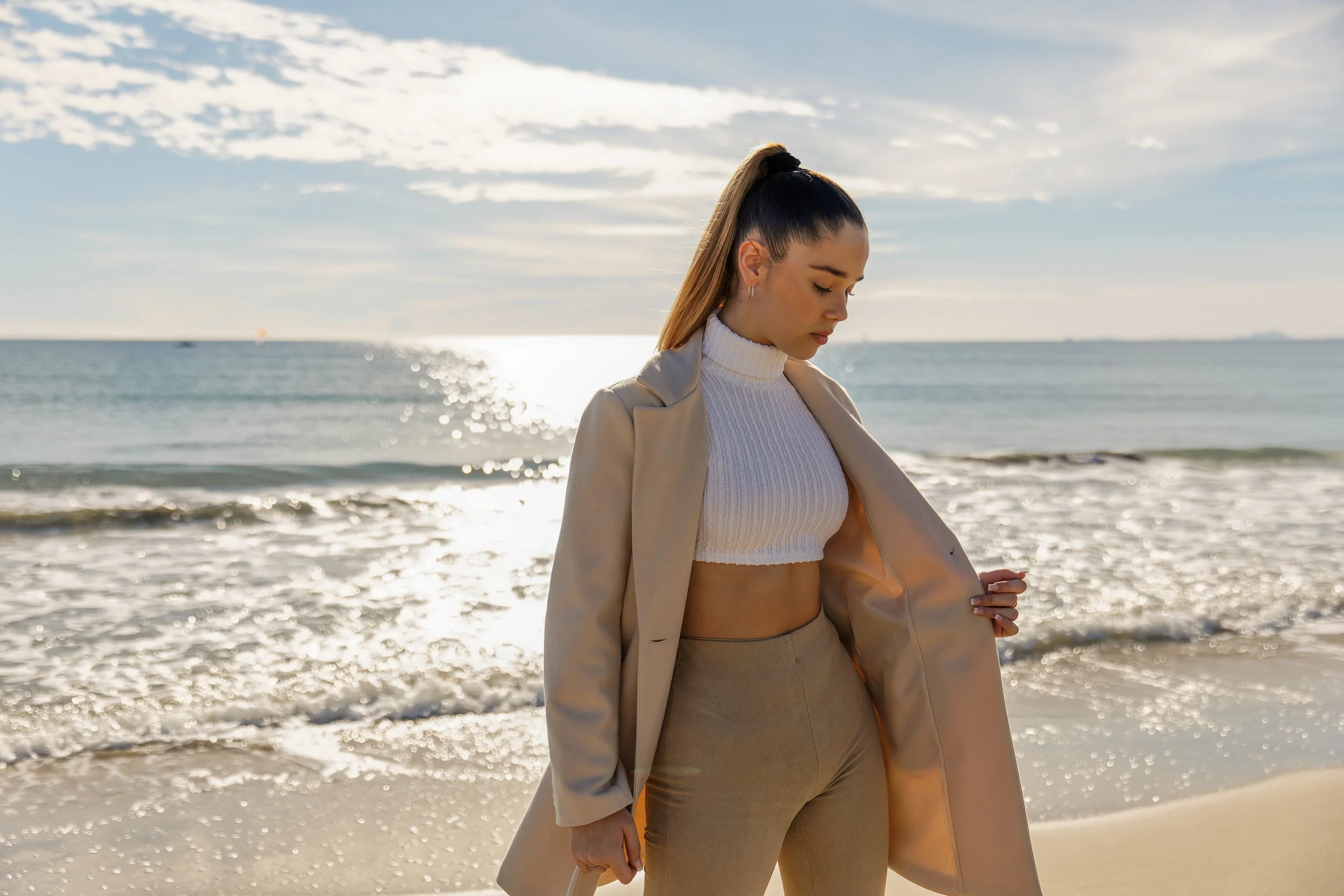
The modern luxury wardrobe is not built on volume. It is curated with care, with each piece chosen for its ability to perform across multiple settings without losing its integrity. A silk dress paired with a structured coat becomes a statement in Manhattan and transforms effortlessly when worn alone in South Florida. A tailored blazer moves from a boardroom to an oceanfront dinner without feeling out of place in either.
This is not trend-driven dressing. It is lifestyle-driven.
Women are no longer preparing for a single destination. They are building wardrobes that support continuity, allowing them to move through their lives without interruption. Fashion becomes an extension of that rhythm, enhancing rather than dictating how they show up in the world.
The idea of resortwear as a separate category begins to feel outdated in this context. Instead, it becomes integrated into a broader philosophy that values fluidity over division. Pieces are selected not for where they belong, but for how they function across time, space, and experience.
This shift reflects something deeper than aesthetics.
There is a growing desire for ease that does not sacrifice sophistication, for elegance that feels natural rather than constructed. Women are choosing to invest in pieces that align with who they are becoming, rather than what they are expected to wear. The wardrobe becomes a reflection of that alignment, quiet in its confidence yet powerful in its presence.
The modern luxury woman does not dress for a season.
She dresses for a life that moves.